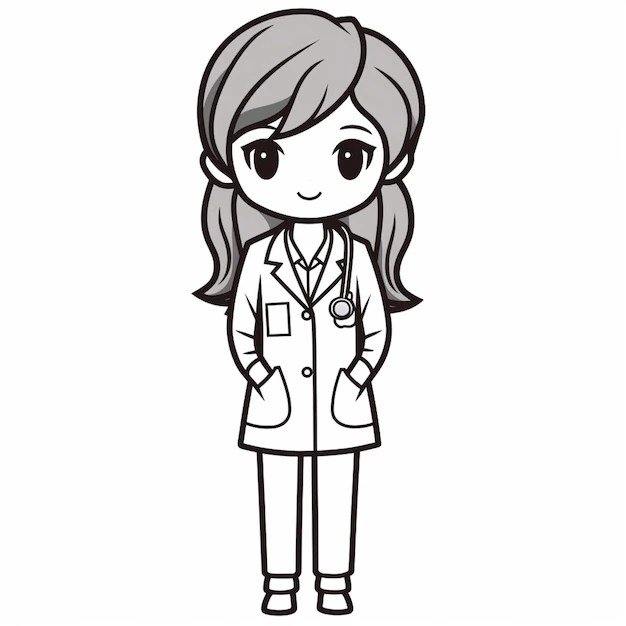
Imagine for a moment: You need a visual that’s instantly engaging, communicates complex medical ideas with a smile, or simply adds a touch of lightheartedness to a serious topic. What comes to mind? Often, it’s a friendly, approachable doctor cartoon. From patient education pamphlets to social media campaigns, these whimsical depictions have an undeniable power to connect. And here’s the exciting news: Drawing & Creating Your Own Doctor Cartoons has never been more accessible, whether you’re a seasoned artist or someone who can barely draw a stick figure.
Forget the days when professional illustration was the only path. Today, a blend of traditional techniques, digital tools, and revolutionary AI generators puts the power of cartoon creation directly into your hands. This guide isn't just about how to draw; it's about unlocking your creative potential to craft compelling, custom doctor cartoons that resonate with your audience, effortlessly.
At a Glance: What You’ll Discover
- Why doctor cartoons work: Understanding their unique appeal and versatility in communication.
- The new frontier of creation: How AI tools like NightCafe and WriteCream are democratizing cartooning.
- Step-by-step guide: Crafting your vision from concept to final image, whether hand-drawn or AI-generated.
- Prompt engineering secrets: Master the art of communicating with AI to get exactly what you want.
- Practical applications: How to use your custom doctor cartoons for education, marketing, and fun.
- Avoiding common pitfalls: Navigating copyright, stereotypes, and maintaining clarity.
The Enduring Charm of Doctor Cartoons: More Than Just a Pretty Picture
Why do we gravitate towards doctor cartoons? They cut through the clinical seriousness, soften intimidating subjects, and make healthcare feel more human. A well-designed cartoon can:
- Simplify complex information: Visual metaphors can explain diagnoses, procedures, or health tips more effectively than text alone.
- Create relatability: A friendly, often humorous, cartoon doctor can break down barriers and make patients feel more at ease.
- Enhance engagement: In a world saturated with information, cartoons grab attention and make content more memorable, whether it's a blog post or a clinic poster.
- Build brand identity: A consistent cartoon style can become a distinctive and approachable element of a healthcare practice's branding.
- Inject humor and empathy: Laughter is often the best medicine, and cartoons provide a safe space for gentle humor or empathetic storytelling.
For decades, creating such custom visuals meant hiring a professional illustrator, which could be costly and time-consuming. But technology has reshaped this landscape entirely, making professional-quality visuals attainable for everyone.
Your Toolkit: From Pen & Paper to Pixels & AI
The journey to creating your own doctor cartoons can take several exciting paths, each with its own benefits and learning curve.
The Traditional Path: Hand-Drawn Cartoons
For the purists or those who enjoy the tactile experience, hand-drawing remains a cherished method. It offers unparalleled creative control and a deeply personal touch.
- What you'll need: Paper, pencils, erasers, ink pens, markers, or colored pencils.
- The process: Start with basic shapes, build up details, refine lines, and add color.
- The benefits: Complete artistic freedom, unique style development, a sense of accomplishment.
- The challenge: Requires time, practice, and a developing understanding of anatomy, expressions, and cartooning principles.
The Digital Leap: Software & Tablets
Bridging the gap between traditional and modern, digital drawing offers the flexibility of undo buttons, layers, and a vast palette of brushes.
- What you'll need: A digital drawing tablet (like a Wacom or iPad with Apple Pencil), and software such as Adobe Photoshop, Procreate, Clip Studio Paint, or Krita.
- The process: Mimics traditional drawing but with digital tools, allowing for easy edits and experimentation.
- The benefits: Efficiency, non-destructive editing, access to countless colors and textures, easy sharing.
- The challenge: Initial investment in hardware and software, a learning curve for digital tools.
The AI Revolution: Your Instant Cartoon Studio
This is where the game truly changes for anyone without extensive artistic training. Artificial Intelligence has burst onto the scene, transforming complex artistic creation into an accessible, prompt-driven process. No drawing skills? No problem.
NightCafe: Unleashing AI-Powered Artistic Interpretation
NightCafe is at the forefront of AI art generation, offering a sophisticated platform to create diverse, high-quality images, including doctor cartoons. It’s less about drawing lines yourself and more about crafting descriptions.
- How it works: You provide text prompts, and NightCafe’s advanced AI models (like Stable Diffusion) interpret your words, generating unique visual interpretations. Think of it as telling a highly skilled artist exactly what you want, in detail.
- Diverse styles & novelty: The AI can mimic countless artistic styles – from comic book to watercolor, realistic to abstract – ensuring your output is novel and unique. This blend of artistic interpretation and technological innovation creates compositions you might never have imagined.
- Commercial considerations: Importantly, NightCafe-generated doctor drawings can be leveraged for commercial purposes, such as clinic decor, educational materials, or professional branding. Always be sure to review NightCafe's Terms of Service for specific usage rights and attribution requirements.
- User control: While AI does the heavy lifting, you remain in control by refining your prompts and experimenting with different settings to steer the AI towards your vision.
WriteCream’s Doctor Cartoon Image Generator: Personalized Cartoons on Demand
If NightCafe offers broad artistic exploration, WriteCream provides a more specialized, streamlined experience specifically for doctor cartoons. It's designed for speed and ease, making personalized doctor-themed images available with a single click.
- Ease of use: This tool is incredibly straightforward. Navigate to its page, input a few preferences, and generate. It’s ideal for quick, specific needs like an urgent blog image or a component for a healthcare campaign.
- Key features and customization:
- Detailed preferences: You can specify the doctor’s appearance, gender, clothing (e.g., scrubs, lab coat), and other specific features.
- Tone and style choices: Beyond appearance, you can influence the overall feel – opting for a playful, professional, or even a slightly serious tone.
- Single-click generation: Once your preferences are set, the image is generated almost instantly.
- Ideal for: Educational materials, blog posts, social media, or healthcare campaigns where a consistent, personalized, and quickly produced cartoon is needed.
Both NightCafe and WriteCream represent a paradigm shift, making high-quality cartoon creation accessible to anyone, regardless of their drawing prowess.
Crafting Your Cartoon Doctors: A Step-by-Step Guide
Whether you're using a pencil or a prompt, the fundamental principles of character creation remain crucial.
1. Defining Your Vision: Style, Purpose, & Audience
Before you even start sketching or typing, clarify what you want to achieve.
- What’s the purpose? Is it for a children’s health book, a humorous corporate training module, a serious patient information leaflet, or a clinic's marketing?
- Who is your audience? Children respond to different styles than adults. Professionals might prefer a cleaner, more respectful aesthetic.
- What style are you aiming for?
- Simple & iconic: Think classic newspaper cartoons.
- Exaggerated & comedic: For humor and strong emotional expression.
- Clean & modern: Often used in explainer videos or corporate communications.
- Cute & friendly: Perfect for pediatric settings.
- Realistic-ish (but still cartoony): A blend of real-world details with cartoon charm.
- What emotion should your doctor convey? Friendly, empathetic, knowledgeable, humorous, wise, calm?
This pre-visualization stage is vital. It guides all your subsequent artistic choices or prompt commands.
2. The AI-Powered Approach: Prompt Engineering for Perfect Docs
If you’re leaning into AI, your "drawing skill" translates directly into your "prompt engineering skill." The better your prompts, the closer you get to your ideal cartoon.
Keywords are King: How to Write Effective Prompts
Think of prompts as your direct instructions to the AI artist. Be descriptive, specific, and clear.
- Start with the subject: "Cartoon doctor," "animated physician," "medical professional illustration."
- Describe appearance:
- Gender/Age: "Male doctor," "female pediatrician," "elderly surgeon."
- Ethnicity/Hair/Eyes: "Asian doctor with glasses," "African American doctor with dreadlocks," "blonde nurse with blue eyes."
- Clothing: "Doctor in blue scrubs," "physician in a lab coat and stethoscope," "dentist with a mask."
- Build/Facial Features: "Chubby doctor smiling," "slim doctor with serious expression," "friendly doctor with cheerful eyes."
- Specify action/pose/expression: "Doctor giving a thumbs up," "doctor explaining chart," "doctor listening empathetically," "doctor laughing," "doctor looking confused."
- Add context/setting: "In a modern clinic," "in a hospital emergency room," "at a patient's bedside," "with medical equipment in the background."
- Define art style: "Pixar style cartoon," "anime doctor," "watercolor cartoon," "vector art style," "3D cartoon," "comic book style."
- Include specific elements: "Holding a syringe," "with a clipboard," "next to an X-ray," "with a cute robot helper."
- Desired mood/tone: "Playful cartoon," "professional illustration," "humorous doctor graphic," "empathetic doctor character."
Example Prompt (for NightCafe or similar):
"A cheerful female pediatrician cartoon, with bright blue scrubs and a friendly smile, holding a colorful teddy bear, in a whimsical children's clinic waiting room, vibrant watercolor style, professional educational material."
Example Preferences (for WriteCream’s Generator): - Doctor’s Appearance: Female, mid-30s, short brown hair, warm smile.
- Clothing: Light blue scrubs, stethoscope around neck.
- Tone/Style: Playful, slightly exaggerated features, approachable.
- Specific Features: Holding a clipboard and pen.
Experimentation is Key
The first prompt might not yield perfection. AI generation is an iterative process.
- Generate: Create your initial image.
- Review: What worked? What didn’t? Is the expression right? Is the setting accurate?
- Refine: Tweak your prompt. Add more detail, remove conflicting words, try different synonyms.
- Regenerate: Try again. Don't be afraid to generate multiple versions and select the best one.
Remember, you're not just drawing; you're directing an intelligent artist. The more precisely you can describe your vision, the better the outcome. As you explore the possibilities, it's worth checking out various styles and creations to spark your imagination. You can easily Explore our doctor cartoons to see what others are creating and get a sense of diverse artistic interpretations generated by AI. This can be a fantastic way to refine your own prompt engineering strategies and discover new aesthetic directions for your projects.
3. Traditional & Digital Drawing Techniques (Briefly)
If you're going the hand-drawn or digital path, a few foundational cartooning tips will elevate your work.
- Start with basic shapes: A doctor's head can be a circle, a body a rectangle or oval. Build from these simple forms.
- Exaggerate features: Cartooning thrives on exaggeration. Big eyes for friendliness, a furrowed brow for concern, a wide smile for cheer.
- Convey emotion through expression & body language: A slump can show tiredness, an open stance can show openness. Pay attention to eyebrows, mouth, and posture.
- Master medical accessories: Stethoscopes, lab coats, syringes, bandages – learn to draw these simply and clearly so they're instantly recognizable.
Beyond the Character: Bringing Your Doctor Cartoons to Life
A great character is just the beginning. The environment and context elevate your cartoon into a story.
- Setting the Scene: Where is your doctor? A sterile operating room? A cozy examination room? A bustling waiting area? Simple background elements – a monitor, a plant, a colorful wall – add depth without distracting.
- Telling a Story: Scenarios & Narratives: Cartoons excel at storytelling.
- A doctor patiently explaining a diagram to a worried patient.
- A doctor giving a vaccination to a brave child.
- A team of doctors celebrating a successful operation.
These scenarios make your cartoons dynamic and purposeful. - Color & Style: Setting the Mood:
- Bright, warm colors: Often convey friendliness and optimism, ideal for pediatric or general wellness themes.
- Cool, muted tones: Can suggest professionalism or a calmer, more serious approach.
- Consistent color palette: Helps maintain brand identity and visual coherence across multiple cartoons.
Where to Use Your Doctor Cartoons (Commercial & Personal)
The applications for custom doctor cartoons are incredibly diverse.
- Educational Materials:
- Patient information leaflets explaining conditions or treatments.
- Presentations for medical students or community health workshops.
- Infographics simplifying health statistics.
- Textbooks or online learning modules.
- Branding & Marketing:
- Clinic websites and social media profiles.
- Posters and signage for waiting rooms or examination rooms.
- Business cards and promotional merchandise.
- Email newsletters and blog post headers.
- Personal Projects & Gifts:
- Custom greeting cards for healthcare workers.
- Personalized gifts for medical school graduates.
- Decor for a medical professional's office.
- Digital Content:
- Emojis or stickers for messaging apps.
- Animated GIFs for social media engagement.
Remember to always consult the Terms of Service for any AI tool you use regarding commercial rights. While many platforms, like NightCafe, do allow commercial use, understanding the nuances of attribution and ownership is crucial.
Common Pitfalls to Avoid When Creating Doctor Cartoons
Even with the ease of AI, it's important to approach cartoon creation thoughtfully.
- Relying on harmful stereotypes: Doctors come from all backgrounds. Avoid perpetuating narrow, outdated, or offensive stereotypes regarding gender, ethnicity, or appearance. Strive for diverse and inclusive representations.
- Lack of clarity: Ensure your cartoon's message is clear and unambiguous. A cluttered image or a poorly depicted action can confuse your audience. Simplicity often trumps complexity.
- Over-complication: Especially with AI prompts, it's easy to add too many conflicting details, leading to muddled results. Start simple and build complexity gradually.
- Ignoring usage rights: Just because an image is generated doesn't mean it's free for any use. Always check the platform's terms for commercial use, attribution, and any restrictions. This is especially true if you plan to sell or widely distribute your creations.
- Inconsistent style: If you're creating a series of cartoons, strive for a consistent style across all of them. This builds familiarity and professionalism. AI tools can help by allowing you to reuse successful prompt elements.
- Forgetting your audience: A cartoon that's hilarious to a group of surgeons might not be appropriate for a children's hospital waiting room. Tailor your humor and style to your intended viewers.
FAQs: Your Quick Questions Answered
Do I need to be an artist to draw doctor cartoons?
Absolutely not, especially with the advent of AI tools like NightCafe and WriteCream. These platforms allow you to generate professional-quality cartoons simply by describing your vision in text prompts. While traditional drawing skills are a bonus, they are no longer a prerequisite for creating compelling doctor cartoons.
Are AI-generated doctor cartoons unique?
Yes, AI-generated doctor cartoons are designed to be unique. Using advanced models, tools like NightCafe create novel compositions, styles, and perspectives based on your prompts. While the AI is trained on vast datasets, it generates new images, not copies. However, the more generic your prompt, the more similar your output might be to others using similar generic prompts. Specific and detailed prompts lead to highly unique results.
Can I sell cartoons I create with AI tools?
Often, yes, but always check the specific Terms of Service of the AI platform you are using. Many platforms, including NightCafe, allow for commercial use of images generated by their users, subject to their terms regarding usage rights and attribution. Clarify these details before using AI-generated content for commercial purposes to ensure compliance.
How do I make my cartoon doctors look friendly/serious/etc.?
Whether drawing by hand or using AI, conveying emotion is key. For AI, specify emotions directly in your prompt: "friendly smile," "serious expression," "empathetic eyes," "doctor looking concerned." For traditional drawing, focus on facial features (eyebrows, mouth shape, eye size), body posture (open, closed, slumped), and subtle gestures (a hand on the chin for thoughtfulness).
What's the best software for drawing doctor cartoons digitally?
For professional digital drawing, Adobe Photoshop or Clip Studio Paint are popular choices, offering extensive features. Procreate (iPad only) is excellent for its intuitive interface. For free options, Krita or GIMP are powerful. Ultimately, the "best" software is the one you find most comfortable and effective for your workflow.
Your Next Step: Drawing Inspiration and Taking Action
Creating your own doctor cartoons, whether for education, branding, or pure fun, is now a powerfully accessible endeavor. You have an incredible array of tools at your disposal, from the timeless charm of hand-drawn art to the cutting-edge intelligence of AI generators.
The journey starts with a clear vision: Who is your doctor? What story do they tell? What message do they convey? Then, arm yourself with the right tools—be it a sketchpad and pencil or a well-crafted AI prompt—and dive in. Don’t be afraid to experiment, refine, and embrace the iterative nature of creativity.
The ability to create custom, engaging visuals to humanize healthcare, educate patients, or simply bring a smile, is no longer limited to a select few. It’s a power you now hold. Go forth and create, transforming your ideas into vibrant, impactful doctor cartoons that truly resonate.