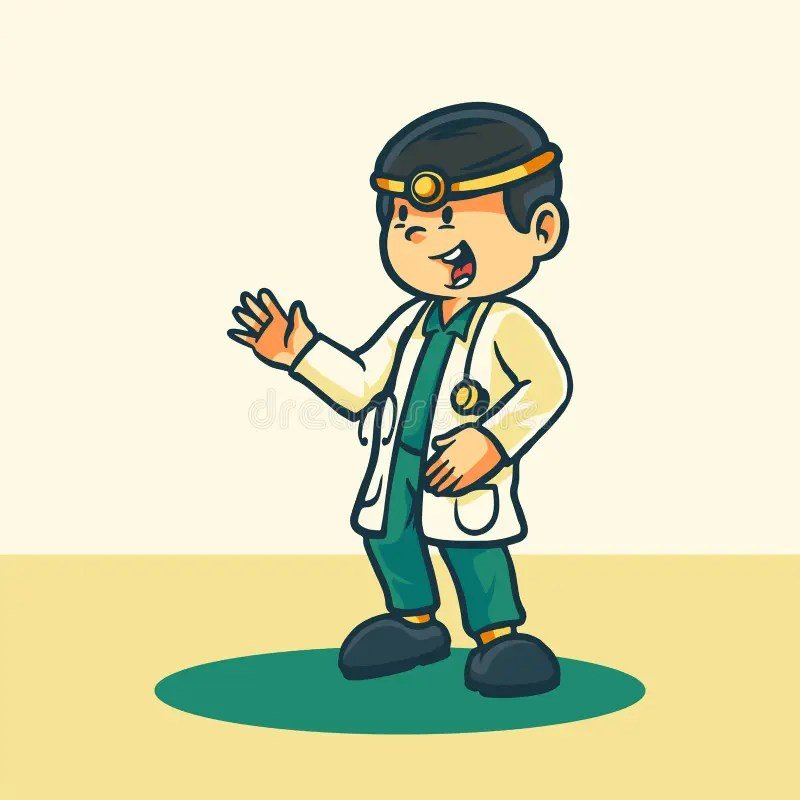
It's no secret that a trip to the doctor can feel a little daunting for a young child. The unfamiliar sounds, the sterile smells, the strange instruments – it's a lot for their developing minds to process. But what if we could transform that apprehension into understanding, curiosity, and even excitement? That's precisely the magic of Doctor Cartoon Games & Interactive Activities: a playful gateway for early childhood learning that demystifies healthcare, builds empathy, and sparks a lifelong interest in wellness.
These engaging activities aren't just about fun; they’re powerful educational tools. By stepping into the shoes of a healthcare hero, children develop crucial social-emotional skills, expand their vocabulary, and grasp fundamental concepts about the human body and healthy living. As a seasoned journalist who's seen the profound impact of well-designed educational play, I'm here to guide you through creating the most enriching doctor-themed experiences for your little ones.
At a Glance: Key Takeaways for Busy Parents & Educators
- Demystify Doctor Visits: Doctor play helps children understand medical procedures, reducing anxiety and fear.
- Build Empathy: Kids learn about caring for others and the vital role of doctors and nurses in the community.
- Boost Key Skills: Activities foster literacy, math, science, and fine motor skills through hands-on engagement.
- Encourage Healthy Habits: Learn about hygiene, exercise, and good nutrition in a fun, interactive way.
- Simple & Accessible: Many impactful activities require only everyday household items or simple crafts.
- Screen Time Smart: Integrate educational doctor cartoon games wisely, focusing on interactive, age-appropriate content.
Why Play Doctor? The Deep Benefits of Medical Role-Play for Young Minds
Imagine a world where your child eagerly anticipates a check-up, not with dread, but with a sense of familiarity and even competence. This isn't just a dream; it's a tangible outcome of thoughtful doctor-themed play. Far from being mere entertainment, these interactive experiences serve as foundational building blocks for a child's holistic development.
Reducing Fear and Anxiety Around Healthcare Visits
For many children, medical appointments are a source of significant stress. The unknown can be terrifying. Through doctor play, children gain a sense of control and predictability over these experiences. They can "practice" what happens at the doctor's office, from listening to a heartbeat to getting a "shot" (a gentle poke with a pretend syringe), making real-life visits far less intimidating. This proactive engagement transforms a passive, often scary experience into an active, understandable one.
Building Empathy and Understanding for Healthcare Heroes
When a child pretends to be a doctor or a nurse, they begin to grasp the responsibilities and compassionate nature of these professions. They learn that doctors are helpers who want to make people feel better, not scary figures. This role-playing fosters empathy, as they consider the feelings of their "patients" (often their stuffed animals or dolls), and builds respect for the people who care for our health. It's a foundational lesson in community and service.
Developing Essential Skills Through Playful Practice
The beauty of doctor cartoon games and interactive activities lies in their multi-faceted learning opportunities. They seamlessly weave together cognitive, physical, and social skills development:
- Literacy and Language: Children learn new vocabulary like "stethoscope," "thermometer," "diagnosis," and "symptoms." Reading eye charts, labeling body parts, and following story lines related to healthcare experiences further enhance their language skills.
- Mathematics and Measurement: Activities like measuring height and weight, sorting "bones" by size, or counting medical tools introduce basic math concepts in a practical, engaging context.
- Fine Motor Skills: Handling small instruments, applying bandages, cutting out shapes for crafts, and writing on clipboards all refine hand-eye coordination and dexterity.
- Problem-Solving: Deciding how to "treat" a patient, which "medicine" to give, or how to comfort a sick toy encourages critical thinking and imaginative problem-solving. Understanding the benefits of role-play can significantly enhance a child's developmental trajectory beyond just medical themes.
Fostering Imagination and Creativity
A doctor's office in a child's imagination can be anything from a bustling hospital to a cozy clinic in a treehouse. These activities encourage open-ended play, allowing children to invent scenarios, characters, and solutions. This free-form creativity is vital for cognitive flexibility and innovative thinking, providing a safe space for them to explore and express themselves.
Setting Up Your Home Clinic: Essential Props & Imaginative Play Spaces
You don't need a medical degree or a fully stocked hospital wing to create an enriching doctor-themed play area. The most effective setups are often the simplest, leveraging everyday items and a touch of creativity. The goal is to stimulate imagination, not replicate reality perfectly.
The Core Doctor's Kit: Simple Tools for Big Adventures
Start with the basics. These items, either store-bought or DIY, form the backbone of any doctor's kit:
- Stethoscope: A toy stethoscope is ideal, but two funnels connected by a rubber hose or even a cardboard tube can work. Encourage kids to listen to their own heartbeats, a truly fascinating experience (as noted by Kidssoup).
- Bandages and Plasters: Both fabric and adhesive plasters are fantastic for fine motor practice and comforting "patients."
- Doctor's Coat/Lab Coat: A simple white adult shirt worn backward can instantly transform a child into a medical professional.
- Toy Syringe (no needle): Perfect for pretend "vaccinations" or "medicine."
- Thermometer: A toy version or a craft stick with markings can be used.
- Tongue Depressors: Craft sticks work perfectly for checking "sore throats."
- Cotton Balls and Gauze Pads: These are versatile for pretend wounds and dressings.
Beyond the Basics: Imaginative Additions
Once you have the essentials, expand with items that add realism and extend play scenarios:
- Scale and Measuring Tape: Use a bathroom scale for "weighing patients" and a fabric tape measure for "measuring height." Charting these measurements can introduce early graphing concepts (Kidssoup).
- Eye Chart: Print a simple eye chart with letters or pictures. Have children stand back and "read" it, enhancing letter recognition and following instructions.
- Clipboards and Paper: Encourage "patient records," scribbled prescriptions, or drawing what's "wrong" with a patient.
- Empty Medicine Bottles/Boxes: Ensure they are thoroughly cleaned and child-safe. These are great for pretend "prescriptions."
- Kid-Friendly Magazines: Place a few in a "waiting room" area.
- Small Flashlight: For checking "ears" or "mouths."
Patient Selection: Who Needs a Check-Up?
Stuffed animals and dolls make excellent, patient "patients." They won't complain about getting a pretend shot and are perfect for practicing gentle care. Encourage children to "treat" family members, building a bridge between play and real-world interactions.
Creating the "Hospital" Environment
Designate a corner of a room as the "doctor's office" or "hospital." This doesn't require elaborate decor:
- Block Center Hospital: Encourage children to build a hospital out of blocks, complete with emergency vehicle parking. This combines construction skills with thematic play (Kidssoup).
- Emergency Vehicles: Small toy ambulances or fire trucks can be incorporated for emergency scenarios, adding dynamic elements to the play.
- Comfortable Seating: A small chair for patients and another for the doctor.
Remember, the goal is to inspire, not dictate. Observe how your child interacts with the setup and let their imagination lead the way.
Interactive Doctor Cartoon Games & Activities: Hands-On Learning Adventures
Now that your home clinic is ready, let's dive into specific activities that bring the world of healthcare to life. These games and crafts are designed to be fun, educational, and easy to adapt for various age groups and developmental stages.
Creative Arts & Crafts for Little Medics
Art projects are fantastic for developing fine motor skills and expressing understanding. Many of these ideas come directly from insights into preschool medical activities.
- X-Ray Art (DIY Radiography):
- Teddy Bear Plaster X-Ray: Have your child draw or paint a teddy bear, then let them apply plasters to show where the bear got hurt (Kidssoup). Discuss how the bear feels and how the doctor helps.
- Cotton Bud Skeletons: Using black construction paper, glue cotton buds to create a skeleton. This helps children visualize bones, a core part of a doctor's work (Kidssoup).
- Chalk Hand X-Rays: Trace your child's hand and arm with white chalk on black construction paper, then cut it out. Tape it to a window for a glowing "x-ray" effect, explaining how x-rays show bones (teachingexpertise.com).
- Doctor's Bag & Nurse's Hat Craft:
- Doctor's Bag: Fold a manila folder into a doctor's bag. Print out pictures of medical instruments, or have your child draw them, and glue them inside. Add a small plastic bag with plasters for a tactile element (Kidssoup).
- Nurse's Hat: Simple folded paper hats with a red cross can make children feel like they're truly part of the care team (Kidssoup).
- Pasta Skeletons: Discuss how doctors fix broken bones. Use various pasta shapes (macaroni for ribs, spaghetti for long bones) to create a skeleton on paper, gluing them down to form bones (teachingexpertise.com).
- DIY Stethoscopes & Toothbrushes:
- Stethoscope: Use pipe cleaners and foil to construct a simple stethoscope. This allows children to customize their tools (teachingexpertise.com).
- Toothbrush Craft: Cut out a toothbrush shape from paper. Decorate it with glitter, pom-poms, or stickers. Use cotton balls or white paper strips for the bristles, introducing the concept of dental hygiene (teachingexpertise.com).
- Germ Art & Soap Magic:
- Painting Germs: Provide Q-tips, cotton swabs, and paint. Have children paint "germs" on paper. Discuss how doctors and nurses help us fight germs.
- Soap Magic Experiment: Fill a shallow dish with water and sprinkle glitter (representing germs) across the surface. Add a drop of dish soap to the center, and watch the "germs" scatter! This is a powerful visual lesson on handwashing (teachingexpertise.com).
Literacy & Language Lab: Nurturing Tiny Vocabularies
Enhance language development and early literacy skills with these engaging activities. Discover more early literacy tips to support your child's reading journey.
- Body Part Labeling: Print out a simple outline of a person. Write labels for body parts (e.g., "stomach," "heart," "lungs," "arm"). Have children cut and paste these labels onto their own bodies or the printed outline (teachingexpertise.com).
- Plaster Letter Matching: Write uppercase letters on small pictures of people and corresponding lowercase letters on plasters. Children match the letters by sticking the plasters onto the correct spot (teachingexpertise.com).
- Broken Bone Letter Matching: Cut bone shapes in half. Write an uppercase letter on one half and the matching lowercase on the other. Children then match the two halves to "mend" the bone (teachingexpertise.com).
- "D for Doctor" Activities: Focus on the letter "D." Have children color, trace, and decorate the letter D, connecting it visually to the theme (teachingexpertise.com).
- Story Comparisons: Read several children's books about doctor visits or hospital stays. Afterward, discuss and compare the experiences of different characters, fostering comprehension and critical thinking (Kidssoup).
- Songs & Rhymes: Music is a fantastic way to learn new vocabulary and concepts.
- "At the Doctor What Does the Doctor Check?": Adapt the tune of "Head and Shoulders, Knees and Toes" to name body parts checked by a doctor (Kidssoup).
- "I'm a Nurse Dressed in White": (Tune: "Little White Duck") A simple song about nurses helping sick people (Kidssoup).
- "I'm a Helpful Doctor": (Tune: "I'm a Little Teapot") About doctors making people feel better (Kidssoup).
- "Miss Twiggle had a Baby": A rhyme involving doctors and nurses, perfect for introducing characters in a healthcare setting (Kidssoup).
Math & Measurement for Mini-Scientists
Introduce fundamental mathematical concepts in a playful, hands-on manner.
- Eye Charts & Measurement: Use a simple eye chart to practice matching letters or shapes. Measure and record each child's height and weight, then create a simple graph. This introduces data collection and comparison (Kidssoup).
- Counting Medical Tools: Print a page with various medical tools or symbols. Have children count each item, reinforcing number recognition and one-to-one correspondence (teachingexpertise.com).
- Bone Sorting by Size: Create various sizes of bone shapes. Children sort them into categories (small, medium, large) and count how many are in each, practicing classification and counting (teachingexpertise.com).
- Vet Play: Measuring Stuffed Animals: Children become veterinarians and use blocks or LEGOs to measure the length of their stuffed animal patients. This introduces non-standard measurement in a fun context (teachingexpertise.com).
Science Explorations: Inside the Human Body
Spark curiosity about biology and the functions of the human body. For more hands-on fun, explore other preschool science experiments designed to engage young learners.
- Listening to Heartbeats: Allow children to use a toy stethoscope (or even just their ear!) to listen to their own heartbeat and yours. Explain that the heart pumps blood throughout our bodies to keep us healthy (Kidssoup).
- The Long Digestive System: Use a piece of string, about 27-30 feet long, to demonstrate the approximate length of the human digestive system. This visual aid helps conceptualize internal body parts (teachingexpertise.com).
- Blood Component Sensory Bin: Fill a sensory bin with red marbles (red blood cells), white ping-pong balls (white blood cells), and red beads (platelets). Provide scoops and cups for children to explore and learn about blood's components (teachingexpertise.com).
- Healthy Habits: Exercise & Germs:
- "Doctor's Orders" for Exercise: One child plays the doctor prescribing physical activities like "jump 10 times" or "touch your toes," explaining how exercise keeps our hearts healthy (Kidssoup).
- Matching Healthy Behaviors: Create puzzle pieces or cards that children match, pairing healthy habits with their benefits (e.g., "Eat fruits and veggies" with "Stay strong," or "Wash your hands" with "Keep germs away") (teachingexpertise.com).
To further immerse your child in this world of care and compassion, explore our doctor cartoon collection for animated adventures that reinforce these positive messages.
Beyond the Playroom: Integrating Doctor-Themed Learning into Daily Life
The lessons learned during doctor play don't have to stay confined to the playroom. By making real-world connections, you can amplify their impact and further prepare your child for a lifetime of healthy habits and positive healthcare experiences.
Real-World Connections: Discussing Visits and Healthy Choices
Take opportunities to talk about doctor visits in a calm, matter-of-fact way. When you schedule an appointment, explain what will happen in simple terms, referencing their play experiences: "Remember how your teddy bear got his heartbeat checked? The doctor will do that for you too." Discuss healthy choices like eating nutritious foods, exercising, and getting enough sleep, linking them to feeling strong and visiting the doctor less often. Learning about healthy habits for kids extends far beyond doctor play, impacting overall well-being.
Empowering Through Knowledge: Addressing Fears Honestly
If your child expresses fear about a specific medical procedure (like a shot), acknowledge their feelings rather than dismissing them. Explain why it happens (to keep them safe from germs) and what they can do to cope (sing a song, squeeze your hand). Doctor play can be a safe space to role-play these moments, giving them a sense of preparedness and agency. This honest approach helps manage and understand childhood fears more effectively.
Modeling Healthy Behaviors: Parents as First Teachers
Children learn best by example. Show them that you prioritize your own health by eating well, exercising, and visiting the doctor when needed. Talk about these actions openly. When you take your child for their check-up, maintain a positive and calm demeanor. Your confidence will be contagious and will reinforce the message that doctors are trusted allies in staying well.
Common Questions Parents Ask About Doctor Play
It's natural to have questions about how best to support your child's learning through doctor-themed activities. Here are answers to some common inquiries:
"My child is scared of doctors. Will this make it worse?"
Quite the opposite! Doctor play is one of the most effective ways to alleviate fear. By putting your child in control of the situation, allowing them to be the "doctor," they gain a sense of mastery over the medical environment. They can process their anxieties in a safe, playful setting, making real visits less daunting. It helps them understand procedures and the friendly intentions of medical staff.
"How realistic should the play be?"
Aim for age-appropriate realism that focuses on comfort and care, rather than graphic details. For preschoolers, the emphasis should be on gentle examinations, listening, comforting, and giving "medicine" (pretend). Avoid overly complex or scary scenarios. The goal is to build positive associations, not heighten anxiety. Use props that look real enough to be recognizable but are clearly toys.
"What if we don't have fancy toys?"
You absolutely don't need expensive medical kits! As highlighted in the activity sections, many effective props can be made from household items: a white shirt for a doctor's coat, a cardboard tube for a stethoscope, craft sticks for tongue depressors. Imagination is the most important tool. Encourage your child to use whatever is available to them. Creativity thrives on resourcefulness.
"Are doctor cartoon games safe for screen time?"
Yes, when chosen carefully and balanced with hands-on play. Look for interactive apps or online games that are specifically designed for early childhood education, offering opportunities to identify body parts, match instruments, or follow simple health-related stories. Prioritize games that encourage problem-solving and engagement over passive viewing. Always supervise screen time and discuss what your child is learning.
Making Learning Stick: Tips for Parents and Educators
To truly maximize the educational impact of doctor cartoon games and interactive activities, a thoughtful approach from adults makes all the difference.
Observe and Follow Their Lead
Pay attention to what aspects of doctor play most interest your child. Are they fascinated by the stethoscope? Do they enjoy bandaging "injuries"? Follow their cues to expand on those interests. If they're repeatedly role-playing a specific scenario (e.g., getting a shot), it might indicate an underlying concern they're trying to process. Join their play as a patient or a fellow doctor, letting them direct the narrative.
Ask Open-Ended Questions
Instead of simply telling them what something is, ask questions that encourage thought and discussion:
- "What do you think is wrong with Teddy?"
- "How can we make your patient feel better?"
- "Why do doctors wear masks?"
- "What happens next at the doctor's office?"
These questions promote critical thinking, vocabulary development, and deeper engagement with the theme.
Keep It Fun and Stress-Free
Learning through play should never feel like a chore. If your child isn't interested one day, don't force it. The goal is to create positive associations with healthcare. Keep the atmosphere light and playful. The most valuable lesson is often that learning itself is enjoyable.
Connect to Books and Stories
Supplement hands-on play with picture books about visiting the doctor, going to the hospital, or learning about the human body. Reading together reinforces concepts learned during play, introduces new vocabulary, and provides another avenue for discussion. Many stories feature friendly doctor cartoons that can make the experience even more relatable.
Be Patient
Understanding complex topics like health and the human body takes time. Children will process information at their own pace. Celebrate small victories, like correctly identifying a stethoscope or showing empathy to a "sick" toy. The cumulative effect of consistent, positive exposure will build confidence and knowledge over time.
Your Prescription for Play: Empowering Healthy Futures
Doctor cartoon games and interactive activities are far more than just child's play; they are powerful tools for early childhood development. By creating engaging play spaces, offering simple props, and participating actively, you can transform potential fears into fascination, build essential life skills, and lay the groundwork for a lifetime of understanding and appreciating healthcare.
So, gather your toy stethoscopes, prepare your imaginary prescriptions, and get ready to empower your child with the knowledge and confidence to navigate the world of health. Your little medic is ready to learn, explore, and become a compassionate caregiver, one playful check-up at a time. The health of their understanding starts with your imaginative support.